
As the calendar flips to December, most homeowners in Ontario have shifted their focus from home maintenance to holiday preparation.
Because the mosquitoes have vanished and the wasps have seemingly disappeared, a common misconception takes root: “Pest season is over.”

You might assume that if you haven’t had a mouse or a spider problem by the time the first heavy snow falls, you are in the clear until spring. However, this is a myth that can lead to significant property damage and health risks. The reality is quite the opposite.
December is not only not too late to start pest-proofing – it is often the most critical time to double down on your defences.
While nature sleeps, pests are actively seeking the one thing your home offers in abundance: warmth.
Here is why December is prime time for pest prevention and how you can secure your home, even in the depths of winter.
The “It’s Too Late” Myth
Why do so many people believe that pest control is strictly a summer or autumn activity? It generally comes down to visibility.
In July, you see ants marching across the patio.
In September, you might see wasps becoming aggressive around the barbecue.
But in December, the exterior world seems devoid of insect and animal life.
However, biology tells a different story. As the deep freeze sets in during December and January, the thermal gradient between the outdoors and your indoors becomes drastic.
A mouse that was content living in a woodpile in November might find that environment fatal in December. This survival instinct drives pests to be more aggressive, more creative, and more determined to breach your perimeter in the winter than at any other time of year.
If you have neglected pest-proofing up until now, do not panic. You haven’t missed the boat. You are simply entering “Phase Two” of home defence: The Deep Freeze Protocol.
The Usual Suspects: Who Is Trying to Move In?
To effectively pest-proof in December, you need to know exactly what you are fighting against. In Ontario, the winter pest profile is distinct.
1. The Rodent Invasion (Mice and Rats)
Rodents are the primary enemy in December.
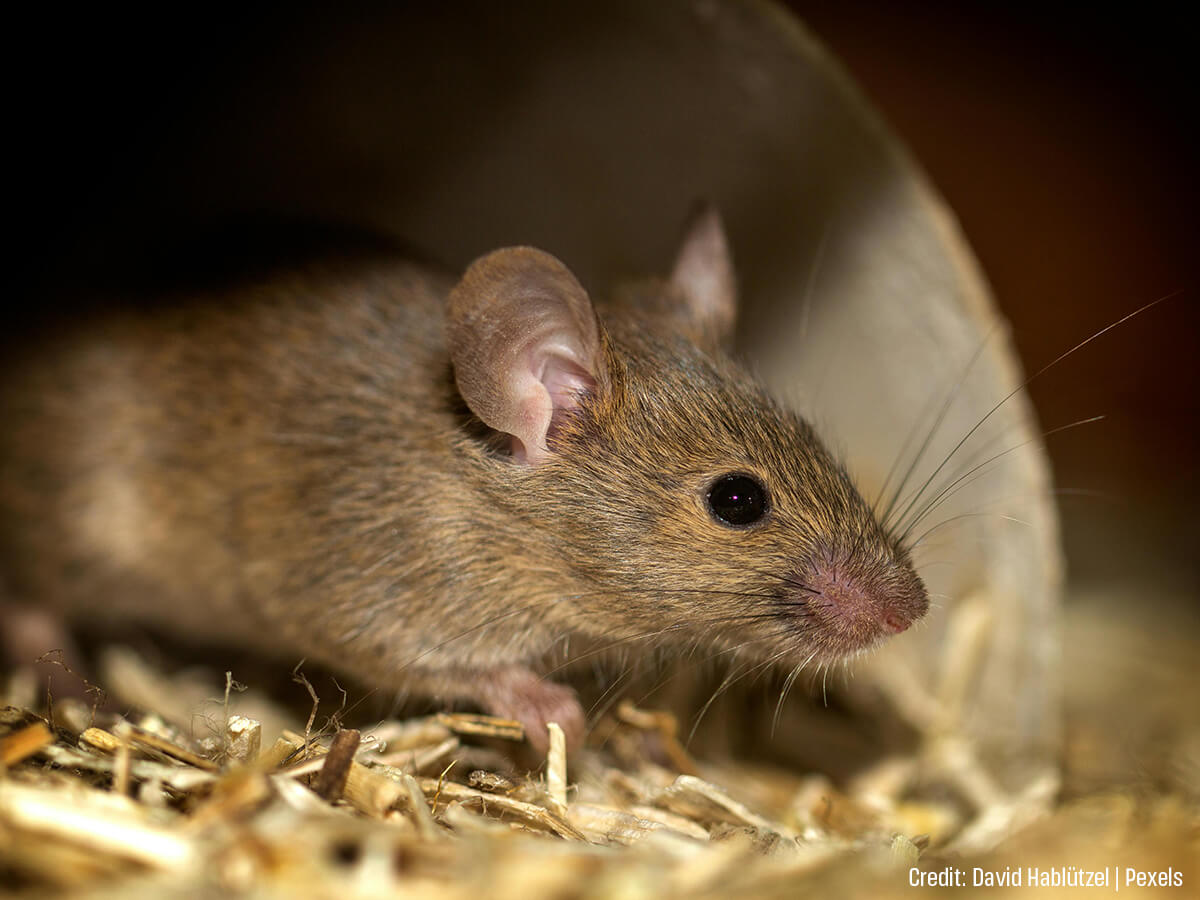
Unlike some animals that hibernate, mice and rats remain active all winter. They do not sleep the season away – they just move indoors. They need three things: warmth, food, and nesting material. Your home provides all three.
A mouse can squeeze through a hole the size of a dime. Once inside, they reproduce rapidly. A single pair of mice entering your basement in early December can result in a full-blown infestation by February.
2. Wildlife (Raccoons and Squirrels)
While many associate larger wildlife with spring nesting, they are actively looking for winter dens right now. Raccoons, in particular, are strong enough to rip off loose shingles or soffits to access your attic. If you live in an area with mature trees, squirrel activity on the roof is a major red flag. This is often where homeowners require professional intervention.
For example, our wildlife control in Midland, ON sees a spike in calls during early winter as these animals realize their summer nests are insufficient for the coming cold.
3. Overwintering Insects
You may have noticed sluggish flies or beetles appearing around your windows on sunny winter days. These are likely Cluster Flies or Asian Lady Beetles. They enter wall voids in the fall to hibernate.
While you can’t stop the ones already inside the walls (until they emerge in spring), you can seal cracks to prevent latecomers and stop the infestation from growing next year.
The December Pest-Proofing Checklist
So, the snow is on the ground. It’s cold. Is it too late to seal the house?
Absolutely not.
In fact, the cold weather can sometimes help you identify drafts where pests might enter. Here is your step-by-step guide to late-start pest-proofing.
Step 1: The Perimeter Audit
Put on your boots and walk the perimeter of your house. You are looking for “thermal leaks.” Anywhere heat escapes, a pest can enter.
- Foundation cracks: Inspect the foundation where the siding meets the concrete. Use hydraulic cement or outdoor-rated caulk to seal cracks.
- Utility lines: Check where pipes and wires enter the home (cable, gas, water, AC lines). The gaps around these pipes are basically designated highways for mice. Stuff these gaps with copper mesh or steel wool (which rodents cannot chew through) and seal them with expanding foam.
- The dryer vent: Ensure your dryer vent has a proper damper or cage. Mice love the warm air pumping out of these vents and will climb up the lint trap if given the chance.
Step 2: Fortifying the Garage
The garage is the most common “staging area” for pests. It is usually warmer than the outside but less secure than the house. Once a mouse gets into the garage, it has time to gnaw its way into the kitchen walls.
- Weather stripping: Check the rubber seal at the bottom of your garage door. If you can see light coming through the corners when the door is closed, a mouse can get in. Replace the stripping immediately.
- Declutter: Do not store firewood in the garage if you can avoid it. If you must, keep it off the floor. Cardboard boxes are also magnets for nesting spiders and rodents – switch to plastic bins with locking lids.
Step 3: Attic and Roof Inspection
You don’t need to climb on an icy roof, but you should inspect from the ground with binoculars or from inside the attic.
- Look for light: Go into your attic during the day and turn off the lights. If you see daylight peeking through the eaves or roofline, you have an entry point.
- Listen: Stand quietly. If you hear scratching, scampering, or rolling sounds (like nuts being dropped), you may already have tenants. This is common in older neighbourhoods. For those living in historic areas, our pest control services in Orillia frequently deal with attics that have been compromised by squirrels seeking refuge from the wind off the lake.
Step 4: Interior Defence
Your habits inside the house matter just as much as the exterior barriers.
- Pantry protection: Transfer cereals, grains, and pet food into hard plastic or glass containers. A cardboard box is no match for a rodent’s teeth.
- Moisture control: Pests need water. Check under sinks for leaks and consider running a dehumidifier in the basement. Silverfish and centipedes thrive in damp winter basements.
Signs You Might Already Have a Problem
Sometimes, despite your best efforts, the timeline is tight. If you are starting your prevention in December, you need to be vigilant for signs that the perimeter has already been breached.
- Droppings: This is the most obvious sign. Check the back of kitchen drawers, under the sink, and in the corners of the basement.
- Grease marks: Rodents have oily fur. As they squeeze through tight spaces or run along baseboards, they leave dark, greasy smudges.
- Strange noises: Scratching in the walls at night is rarely “just the house settling.”
- Gnaw marks: Check electrical wires, wooden furniture legs, and food packaging for teeth marks.
If you discover these signs, “prevention” shifts to “intervention.” This is where the DIY approach often fails. Laying a few traps might catch one or two mice, but it rarely solves the problem of the nest hidden deep in the insulation.
Why Professional Help Is Vital in Winter
There is a distinct advantage to calling in professionals during the winter months. Professional technicians understand the specific behavioural changes pests undergo during the cold season. They know that a rat burrowing in December behaves differently from one foraging in July.
The “Snow Advantage”
Believe it or not, snow can be a pest control technician’s friend. Fresh snow reveals tracks. A professional can circle your home and identify exactly where animals are approaching the foundation, where they are climbing, and where they are disappearing into the structure. This tracking is impossible in the summer.
The Regional Factor
Ontario winters are harsh, and the pests here are resilient. Local knowledge is essential. A generic solution often won’t work for the specific architecture and geography of our region.
For instance, Simcoe County faces unique pressures due to the mix of urban density and surrounding agricultural land. That is why our pest control in Barrie is tailored to handle the rapid migration of field mice into suburban homes as soon as the frost hits the fields.
Safety First
Trying to evict a raccoon from a chimney or sealing a second-story entry point in icy conditions is dangerous.
Professionals have the safety gear and the training to handle ladders and roofs in winter conditions. Furthermore, dealing with rodent droppings carries the risk of Hantavirus and other pathogens; professionals have the correct PPE to clean and sanitize areas safely.
It Is Not Too Late – Take Action Now
If you are reading this in December (or even January), do not fall into the trap of thinking you have to wait until spring to address a pest issue.
Waiting allows the population to breed and the damage to compound. Insulation saturated with urine loses its R-value. Chewed wires present a genuine fire hazard, especially when heating systems are running full blast.
Winter pest-proofing is about peace of mind. It is about sitting by the fire with your family, knowing that you are the only ones enjoying the warmth of your home.
Whether you are sealing up a drafty garage door or calling in the cavalry to handle a noise in the attic, the best time to act is TODAY.
Don’t let pests get cozy for the holidays. If you suspect an infestation or want a professional inspection to secure your home for the winter, reach out to the experts who know Ontario winters best.
Take the next step towards a pest-free winter. Call Mr. Pest Control today at (705) 739-7378.